Role
Product Designer
What I owned
Concept direction, UX flows, interface design, prototype
Focus
Peer-to-peer payment requests, bill splitting, payment tracking
Project type
Concept case study
My approach was guided by research and evidence. Every project begins with listening — understanding the context, the users, and the real problem behind the brief. I ran card sorting with 13 participants and usability testing before placing a single pixel.
The research revealed three things I didn't expect. Users didn't distrust Tikkie — they distrusted anything outside their bank. The social context behind payments disappeared every time they switched apps. And group expenses were the breaking point where the whole fragmented experience collapsed.
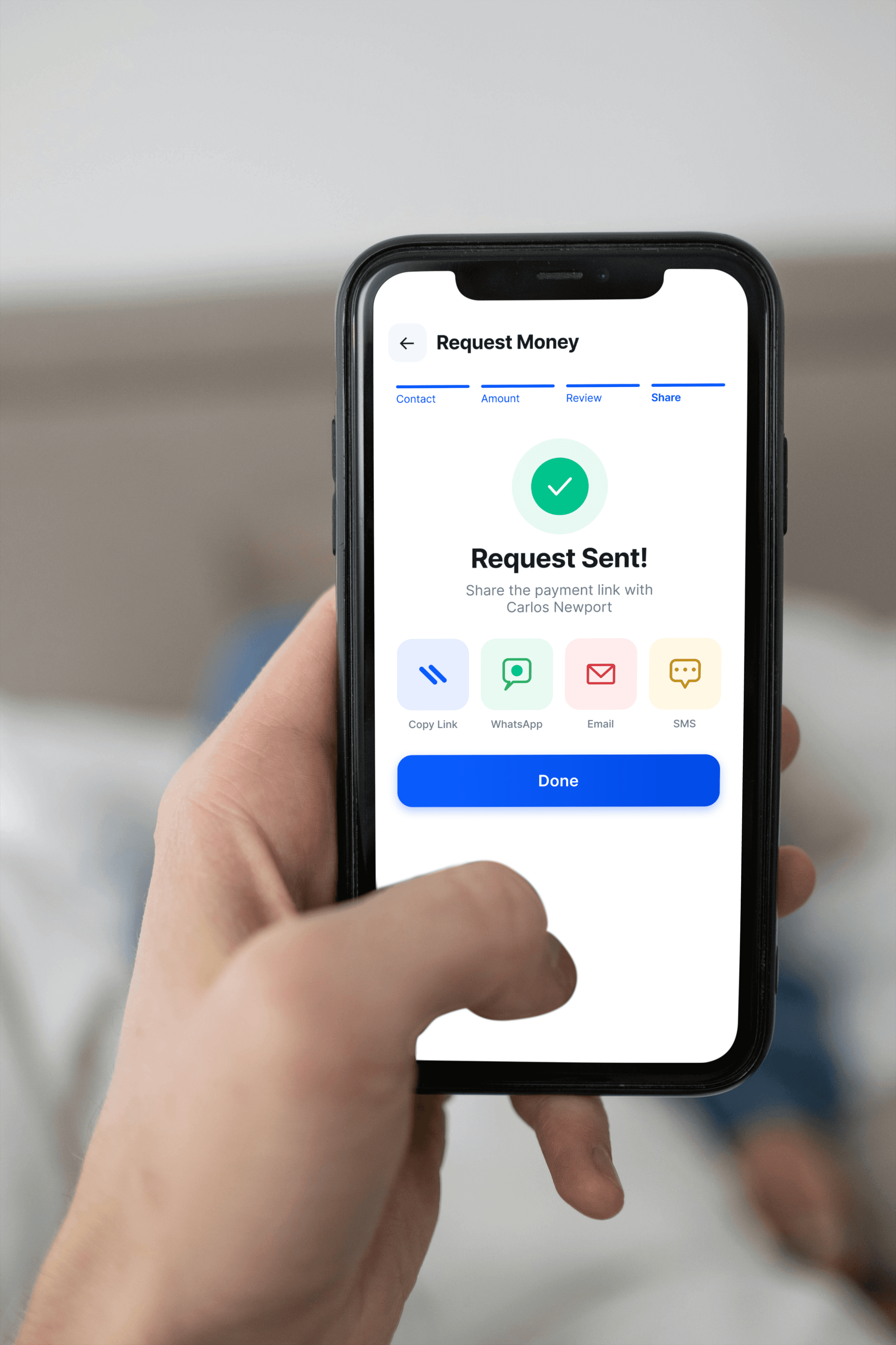
These findings forced a pivot. My original brief was a standalone wallet, but the evidence pointed elsewhere: integration into existing banking apps, where trust already lives. I set three design rules — bank-native not bolted on, context travels with every payment, and no action should take more than three taps.
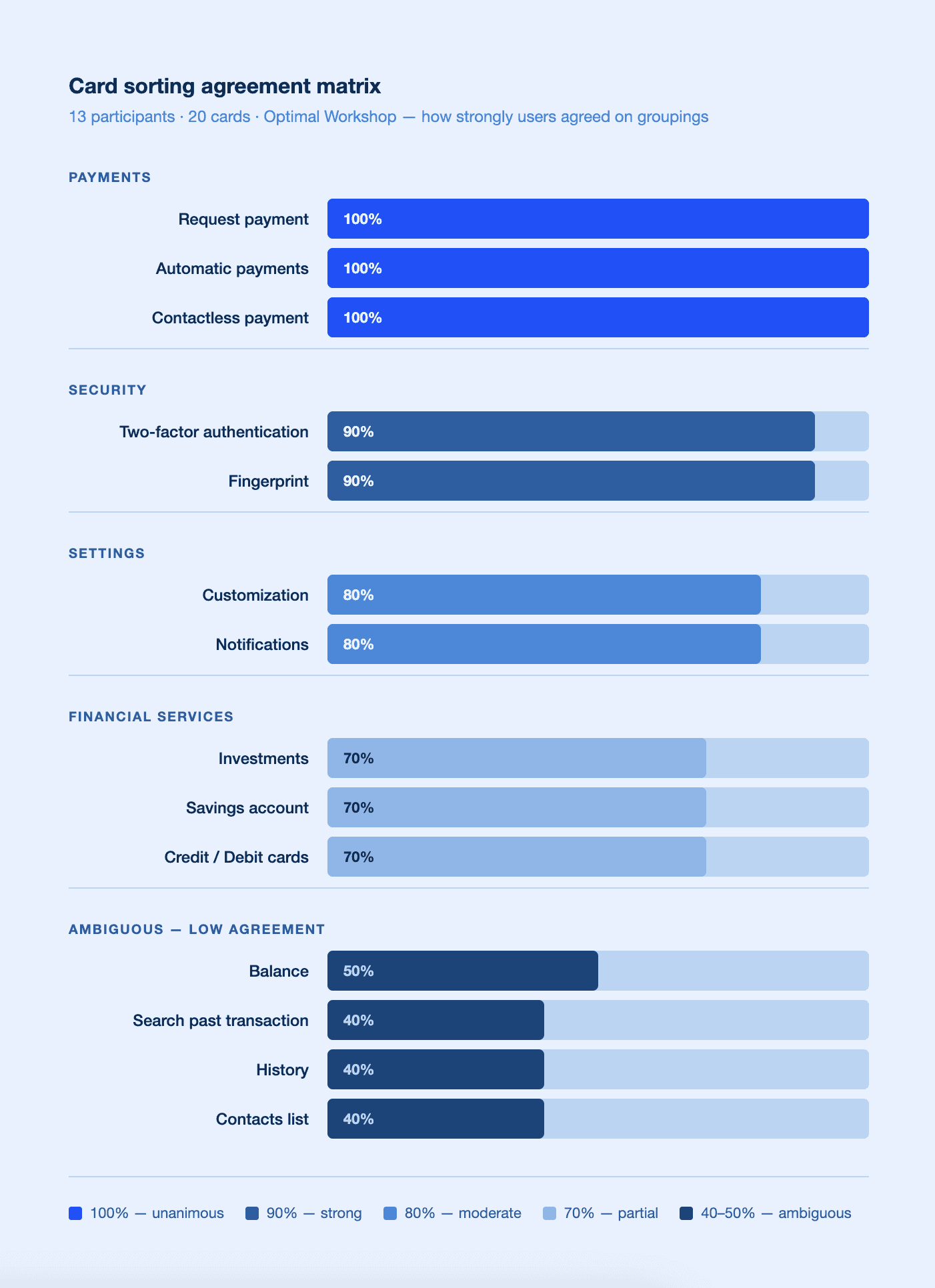
From there, I built with precision. Each research insight shaped a concrete design decision — from renaming "transaction" to "payment" to restructuring the entire information architecture based on how users actually think about their finances.
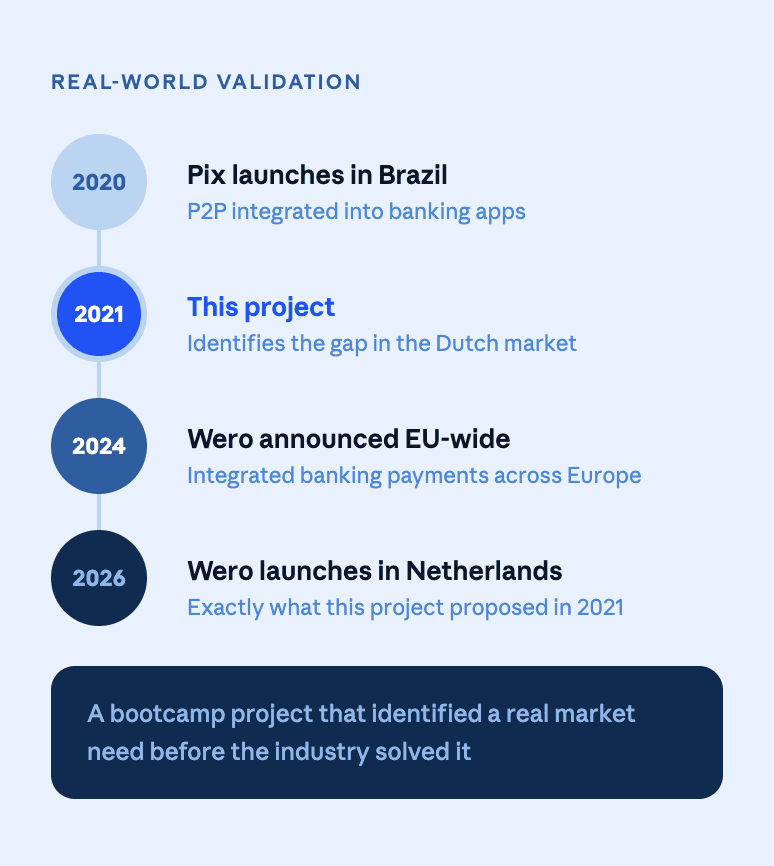
The outcome was more than a working prototype — it was a validated solution to a real market gap. Usability testing showed 75% of participants preferred the integrated approach. In 2026, Europe announced Wero: a bank-integrated payment system launching in the Netherlands with the exact same model I had proposed years earlier.
The design system became a foundation for scalable integration across Dutch banking platforms. Clear payment status states, explicit confirmation flows, and accessible contrast ratios gave users both confidence and control over their money.
These shifts translated into measurable improvements:
Preferred over switching apps
Ease of use rating from usability testing
Accessibility — 16.6:1 contrast ratio
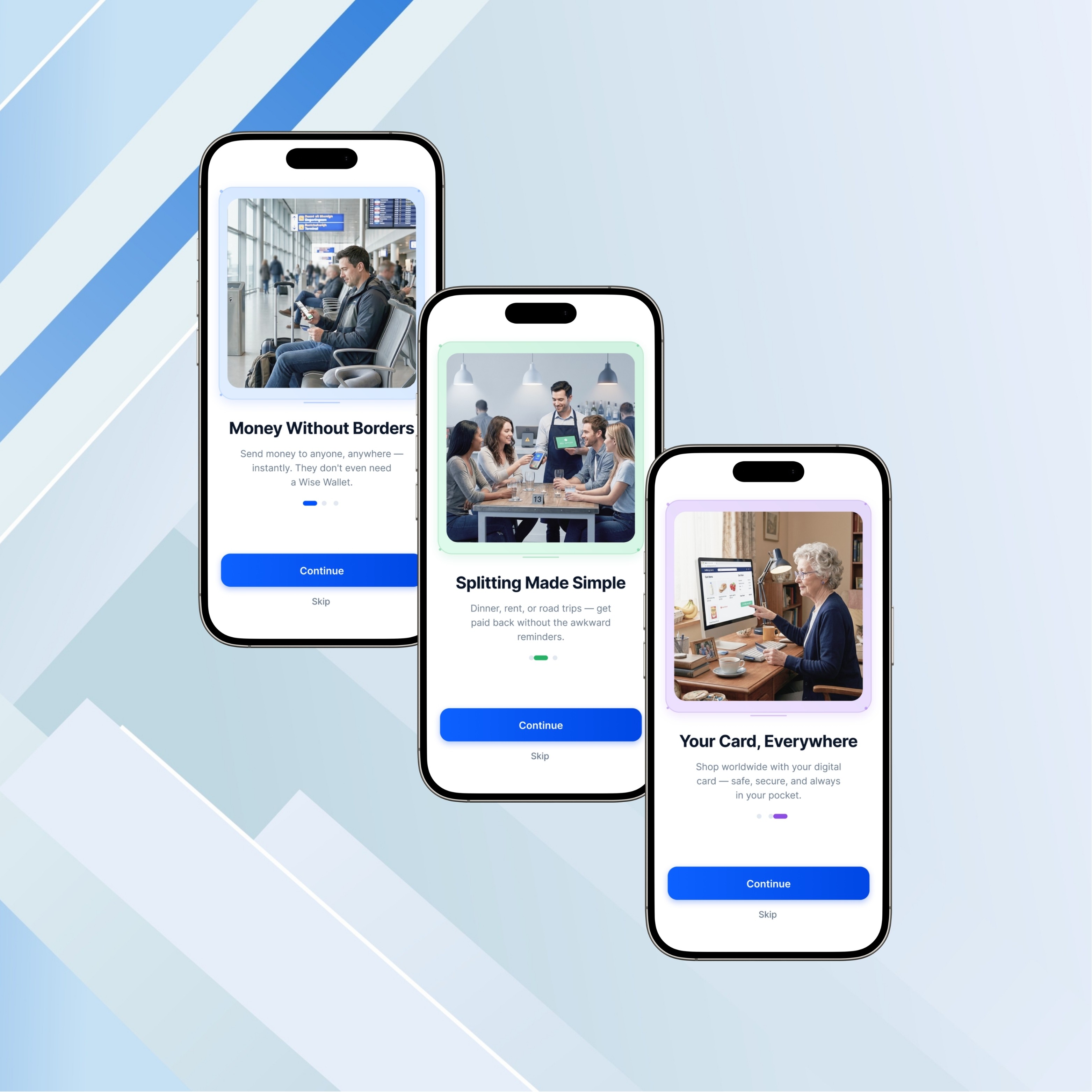
Participants chose the clearer onboarding
