There's a quiet frustration that runs through the UX community: designers who do genuinely good work but struggle to get credit for it. Their research goes unread, their recommendations get deprioritized, and their impact is invisible to the people who make decisions. The problem isn't the design's quality — it's the failure to demonstrate its value.
This guide brings together 14 practical tips to help you change that—not by doing more work, but by focusing on the right work, in the right way, for the right audience.
Part 1: Know Your Ground
1. Start Where You Are
Design impact doesn't begin in strategy decks or leadership off-sites. It starts in your immediate environment — your team, your projects, your daily decisions.
Before you can influence anything at scale, you need to understand your current reality with clarity. Know your context: what is the organization actually optimizing for right now? Know your blockers: who or what is slowing down design adoption? Know your leverage: where do you already have some influence, however small?
The most powerful question you can ask yourself before each project is simply: What can I influence today, right here? Impact built from the ground up is far more durable than influence borrowed from a strategy document nobody has read.
2. Map the Terrain
Design does not live in isolation. Every decision you try to make happens inside an organizational structure with its own power dynamics, competing priorities, and informal hierarchies — and you need to understand that structure before you try to change it.
Study your org chart with genuine curiosity. Identify the decision-makers who have formal authority over what gets built, the silent blockers who can quietly derail your ideas without ever opposing them directly, and the potential allies who share your goals but sit in different departments.
The key insight here is simple but easy to overlook: find out who actually influences what gets built — because it is rarely just the people with the most impressive titles.
Part 2: Build the Right Relationships
3. Expect Resistance
UX designers often enter organizations with a genuine belief that better design is obviously valuable, and that everyone will see it. The reality is messier. You will not always be seen as a hero. Sometimes, you will be perceived as the person slowing things down, adding process, or complicating what others believe is a straightforward decision.
The instinct is to push harder, to present research more forcefully, to make the case louder. However, the more effective move is to build bridges before you push ideas. Resistance is almost always relational before it is rational; people resist change from those they don't trust. Earn trust first.
Relationships matter more than flawless Figma files. This is uncomfortable to admit, but it is true.
4. Build Relationships
Design value spreads through trust, not through deliverables. The most impactful designers are not always the most technically skilled — they are the ones who are present, curious, and visible across the organization.
Talk to developers. Understand their constraints and frustrations with handoffs—the things that make their work harder. Sit with the marketing team. Learn how they think about users and the data they already use. Be visible in spaces where design is not traditionally represented.
People cannot support what they don't understand. Your job is to make your work understandable — and that starts with relationships, not presentations.
Part 3: Design with Strategic Depth
5. Understand the Layers
Too many designers jump straight to the visual layer — the colors, the typography, the interaction patterns — without connecting those decisions to the deeper foundations of the product. This is how you end up with beautiful interfaces that solve the wrong problems.
Jesse James Garrett's five-layer UX model offers a useful corrective. Work through the layers in sequence:
Strategy — What are the product goals? What do users actually need?
Scope — What features and content are required to meet those needs?
Structure — How is the information and interaction organized?
Skeleton — Where do elements live on the page? How does navigation work?
Surface — What does it look and feel like?
When your visual decisions are anchored in strategy, they become far more defensible. You're not choosing a color because it looks nice — you're making a choice that serves a goal.
6. Navigate Problem and Solution Spaces
Effective UX work requires holding three things in mind simultaneously: reality (the actual situation users are in), the problem space (what is not working and why), and the solution space (what could be done differently).
The mistake most organizations make is collapsing all three into one. They see a symptom, generate a solution, and ship it — skipping the problem definition entirely. Your role is to resist that collapse.
Measure what has actually been designed and implemented, not just what you observed in research. Reality informs your understanding. Design is how you prove your interpretation of that reality is correct.
Part 4: Communicate for Business Impact
7. Measure with Intention
Data is only as useful as the rigor behind it. Before any significant design change, establish your baseline. After the change, measure again. But — critically — ask yourself whether the outcome you're seeing was actually caused by your design decision, or whether it merely correlated with it.
This distinction matters enormously when you are making the case for UX investment. Causation is hard to prove and easy to claim. The designers who are taken seriously in business conversations are those who are honest about this distinction and methodologically careful in their measurement approach.
Focus on causation, not just correlation — and be transparent about the difference.
8. Speak ROI Language
Most executives are not unmoved by user experience. They simply think about it in different terms. When you present findings through the lens of "UX friction" or "user delight," you are speaking a language that requires translation before it reaches the people who allocate resources.
Skip the translation step. Frame your impact directly in the terms that executive decision-makers already use:
↑ Revenue — How did this change contribute to growth?
↓ Risk — What problem did this prevent?
↑ Efficiency — How did this save time or reduce operational cost?
↓ Costs — What did this make cheaper or faster?
The design thinking is still happening. You're just presenting the outcomes in the currency that your audience cares about.
9. Speak the Right Language
Closely related to ROI framing is the language you use in day-to-day conversations. Terms like "delightful" and "intuitive" are meaningful within the design community but carry very little weight in business discussions. They are subjective, unmeasurable, and easy to dismiss.
Replace them with metrics that your organization already tracks: retention rates, conversion rates, churn, Net Promoter Score (NPS), task completion rates, and error rates. When you can connect your design decisions to movements in these numbers, you shift from being a craft practitioner to being a business contributor.
Speak business, not just design — without abandoning the user perspective that makes your contribution unique.
Part 5: Expand Your Orbit
10. Design Is Not the Center
One of the most liberating realizations for a UX designer is that design is not the sun around which the rest of the organization revolves. It is one of many functions — one orbit among many in the company solar system.
This is not a diminishment. It is a clarification. When you stop trying to position UX as the most important discipline in the room, you become far more effective at working with the disciplines that already have executive visibility — product management, engineering, sales, and finance.
Align with those teams. Understand their goals. Find the places where your perspective adds genuine value to their work. Collaboration beyond your immediate bubble is not a compromise — it is the source of your leverage.
11. Create Cross-Functional Alliances
The overlap between UX and other functions is often underestimated. Take Sales, for instance: in subscription products, especially, the experience a customer has during onboarding, support, and renewal directly affects the outcomes sales teams are measured on. The two functions are deeply connected — but rarely in conversation.
Join their meetings. Ask what problems they're running into. Understand their metrics. Bring your perspective without waiting to be invited.
Design is strongest when it is not working alone. The alliances you build across functions multiply your impact far beyond what you could achieve by working within the design team alone.
Part 6: Work with Reality, Not Against It
12. Adapt the Narrative
Real organizations do not operate like UX textbooks. They jump to solutions before defining problems. They ship too quickly to properly validate assumptions. They iterate based on instinct and availability rather than evidence and user insight.
You can be right about the process and still be ineffective — if you arrive with the full Double Diamond methodology in a context that has already shipped version two.
A more pragmatic approach: the Reverse Double Diamond. Start where the organization actually is, meet them there, and introduce UX thinking incrementally — validating what has already been built, surfacing the problems that the shipped solution created, and creating the conditions for a more rigorous process next time. Bring the mindset in after, rather than demanding it upfront.
13. Design Beyond the Product
The product interface is only one of many places where design decisions shape the user experience. Every touchpoint matters: how potential users first hear about the product (awareness), how new users learn to use it (onboarding), how people get help when something goes wrong (support), and how loyal users are recognized and retained (loyalty).
If you limit your attention to the UI, you are leaving a significant impact on the table. The designers who achieve the most are those who bring a design perspective to the entire customer journey—and who are willing to work outside the Figma file to do so.
Part 7: The Bottom Line
14. Design = Business Enabler
Here is the honest tension at the heart of the UX profession: design matters more than most organizations currently recognize, and simultaneously less than designers often assume.
The truth is somewhere in the middle — and your job is to bridge that gap. Not once, in a single compelling presentation, but repeatedly, over time, through accumulated evidence. Every project is an opportunity to connect a design decision to a business outcome. Every delivered piece of work is a chance to show, not just say, what UX contributes.
Say it. Show it. Prove it.
A Final Thought
Numbers talk. Pictures convince. If you cannot visualize the impact of your work, stakeholders will not believe it happened — no matter how significant it actually was.
The designers who make the greatest impact are not necessarily those with the most refined craft. They are the ones who understand the terrain, build the relationships, speak the language, and make their work legible to the people who need to act on it.
Want to become the designer who shows results, not just designs nice screens? Start with one of these fourteen tips in your next project. Then do it again.
Talita Collares

August 29, 2025
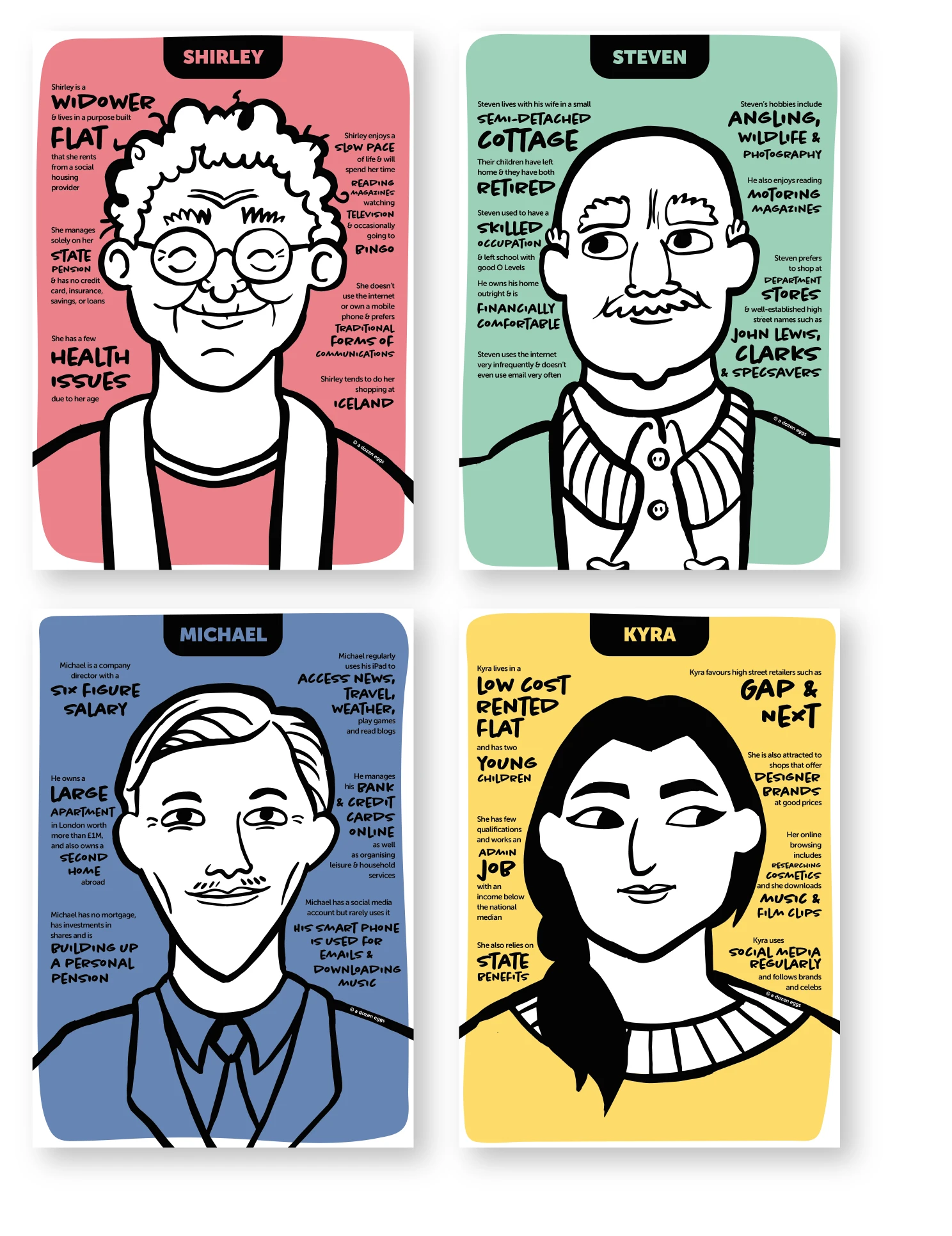
Too often dismissed as static documents, user personas can become powerful, actionable assets when rooted in research and integrated throughout the design process.